
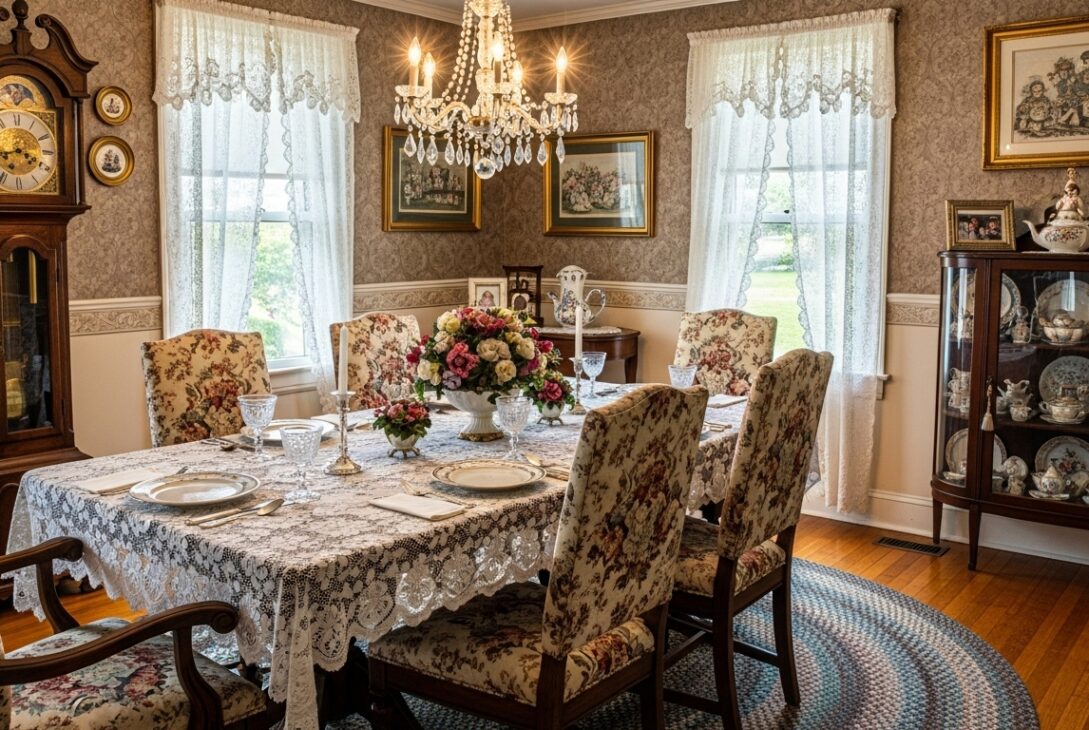
You hear classic grandma dining room décor ideas and your brain jumps to lace, florals, maybe a china cabinet that smells faintly like cedar and time. That’s fine. Let it. Because once you start paying attention, you realize this style isn’t frozen. It moves slowly, yes, but it moves. And it knows things modern dining rooms don’t, like how to make people sit longer without asking.
This décor didn’t come from mood boards. It came from habits. From rooms that hosted decades of dinners without ever changing their mind about who they were. Housing interior surveys show traditional dining rooms are updated less frequently than kitchens or living rooms, sometimes going 15 to 25 years without major changes. That’s not neglect. That’s confidence.
I used to think these rooms were outdated. Then I noticed nobody rushes through meals in them.
The dining table that looks heavier than it is
Grandma dining rooms almost always start with the table. Solid wood, usually darker than fashionable, sometimes scratched in places that don’t line up. Those marks matter. They anchor the room. Visual weight studies show heavier-looking furniture increases perceived stability in a space, which affects how relaxed people feel while seated.
Tables like this don’t apologize for size. They don’t slim down. They expect chairs to adapt. The room orbits them, not the other way around.
I once leaned on one and expected it to wobble. It didn’t. I adjusted my posture instead.
Chairs that don’t match but pretend they do
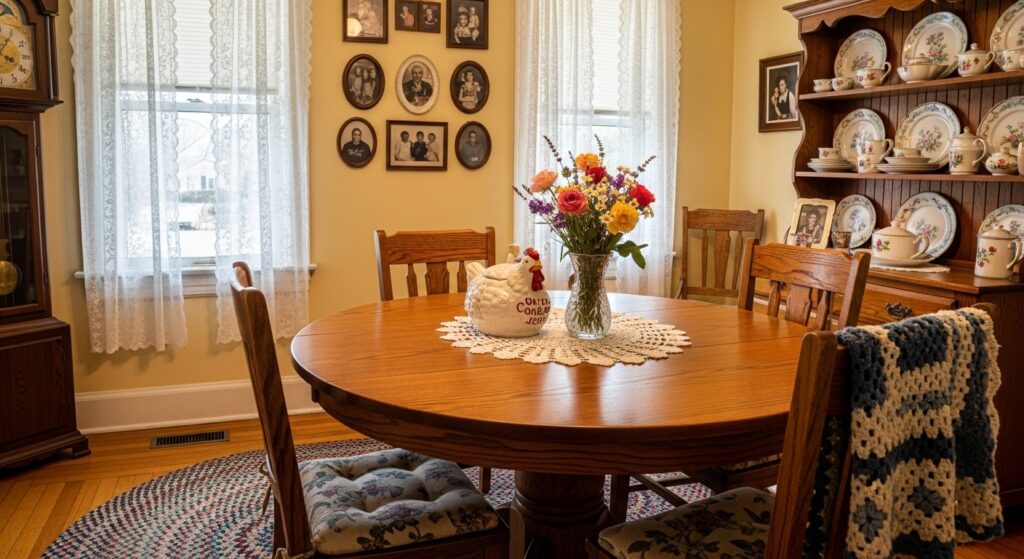
Matching chair sets exist, sure, but classic grandma dining room décor quietly prefers near-matching. Same wood tone, slightly different backs. One chair always squeaks. Nobody fixes it. That’s the chair people recognize blindfolded.
Furniture longevity data shows mixed chair sets often last longer in use because replacements happen one at a time, not all at once. This keeps the room evolving without admitting it.
Slipcovers show up here too. Floral. Textured. Sometimes crocheted. They soften the room acoustically, which explains why voices don’t echo as much. That’s not nostalgia. That’s physics.
China cabinets that aren’t trying to impress you
The china cabinet is a monument. Glass-fronted, tall, quietly judgmental. It holds plates nobody eats from, cups nobody drinks from, and somehow still feels essential. Storage behavior studies show display cabinets increase emotional attachment to a room even when items inside aren’t used regularly.
The placement matters. Usually against the longest wall, not centered. White or cream interiors brighten dark dishware. Light reflects off porcelain differently than off glass or metal. The room knows.
I’ve opened one of these cabinets exactly once in some houses. It still felt important every day.
Tablecloths, runners, and the art of soft edges
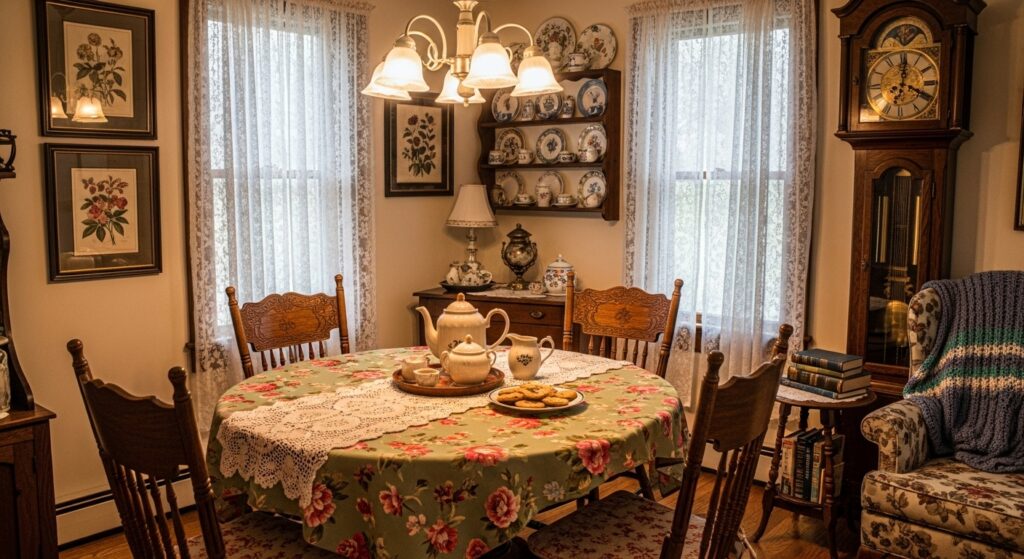
Grandma dining rooms rarely leave the table naked. There’s always something on it. A tablecloth, a lace runner, layered placemats that don’t quite line up. This softens the visual hardness of wood and creates friction for plates, which reduces clatter.
Textile studies show fabric-covered surfaces lower perceived noise even when actual decibel levels don’t change. That’s why these rooms feel quieter without being silent.
Ironing marks sometimes show. Nobody cares. That’s part of the language.
Wallpaper and wall color that chose patience
Walls in classic grandma dining rooms avoid extremes. Creams, pale yellows, muted greens, sometimes wallpaper with tiny florals or faded stripes. These patterns repeat gently. No sharp contrast. No drama.
Wallpaper trend analysis shows small-scale repeating patterns age better than large-scale graphics in dining rooms. People tolerate them longer. They stop seeing them, which is exactly the point.
Paint colors lean warm because warm tones flatter food. Studies on color perception confirm warm neutrals enhance appetite and make meals feel more filling. Grandma knew this without reading anything.
Lighting that forgives everyone at the table
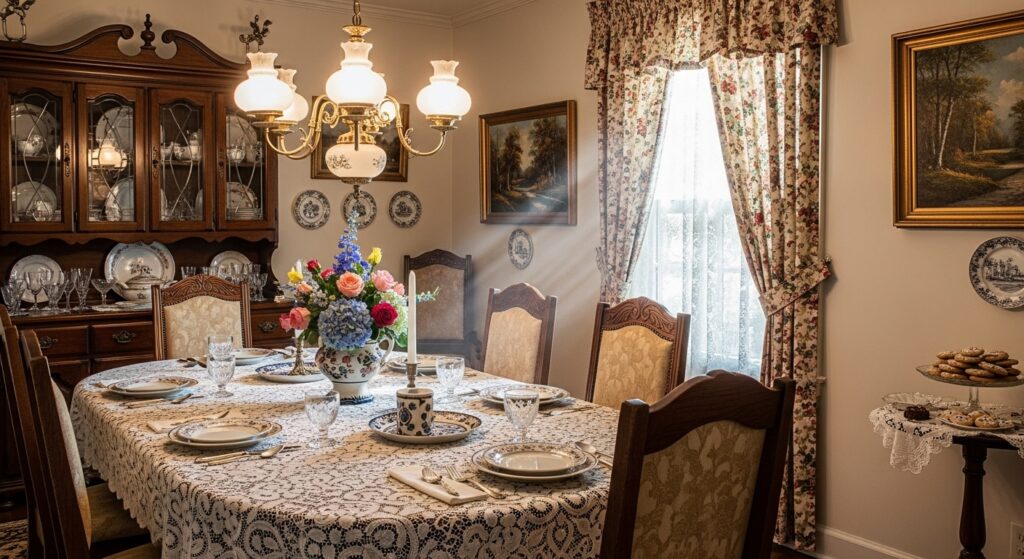
Lighting is never harsh. Chandeliers hang a little lower than modern rules suggest. Lamps appear in dining rooms more often than expected, usually on sideboards. Shades are fabric, not glass.
Lighting comfort research shows diffused light reduces facial contrast, which makes people look softer and more relaxed. This explains why nobody feels self-conscious aging in these rooms.
Bulbs are warm. Always warm. Even when they shouldn’t be.
Sideboards, buffets, and furniture with a job
Every classic grandma dining room has a piece of furniture that holds nothing important but still exists. A buffet. A sideboard. A console covered in doilies and framed photos. It serves as a pause between eating and living.
Usage studies show transitional furniture increases perceived organization even when it doesn’t add functional storage. It gives the room a sense of order.
Drawers stick. Doors creak. These sounds become part of the meal.
Decor objects that never leave
There’s always a bowl. Or a clock. Or a framed print that’s been there longer than anyone can remember. These objects don’t rotate seasonally. They commit.
Environmental psychology research shows stable visual anchors reduce cognitive load in shared spaces. That’s why these rooms feel calming even when crowded.
You stop questioning the objects. They’ve earned tenure.
Why these rooms still work when trends don’t
Classic grandma dining room décor ideas survive because they weren’t built to impress strangers. They were built to hold people. Meals. Arguments. Birthdays. Ordinary Tuesdays.
They don’t photograph well all the time. They don’t scale down nicely. They don’t apologize for age. And somehow, because of that, they keep working.
You sit down. You eat slower. You stay longer than planned. The room doesn’t ask you to leave. It never has.
Last modified: January 29, 2026