
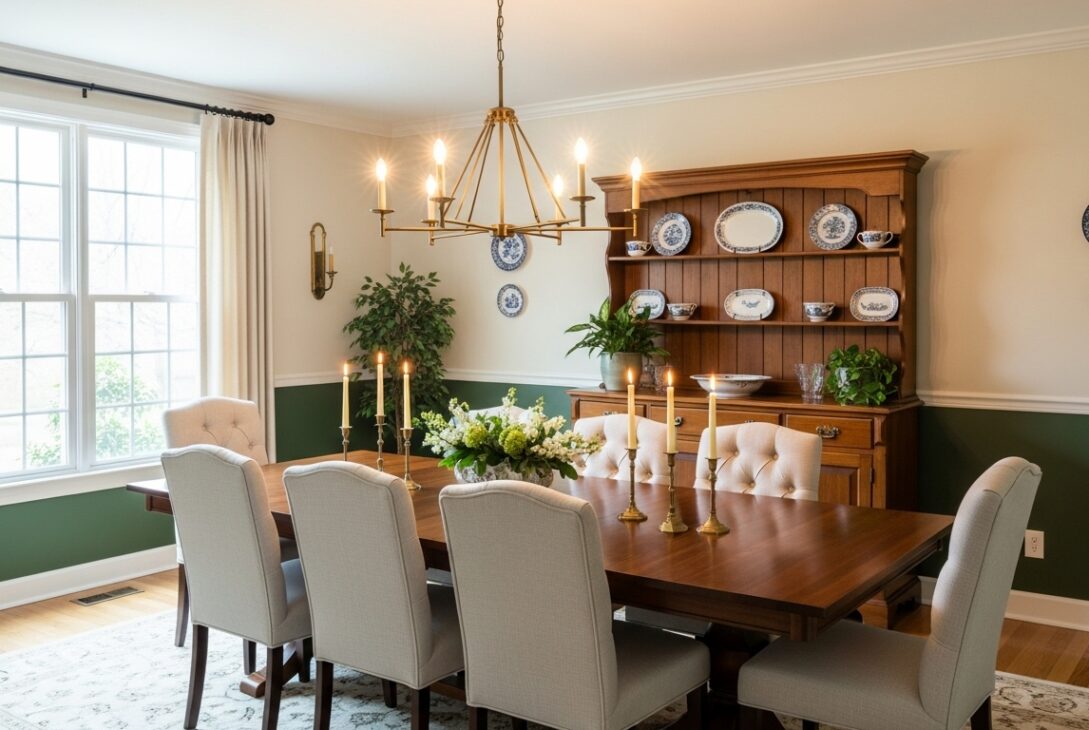
You think green and cream dining room ideas are going to be gentle. Easy on the eyes. Safe enough for guests who judge silently. Then you live with it for a bit and realize cream isn’t neutral at all, it’s reactive. It changes based on the green next to it, the light above it, even the food on the table. One night it feels warm and slow. Another night it feels tense, almost sharp. Same room. Different mood.
Interior color preference studies keep showing cream-based palettes score higher for comfort than pure white, especially in rooms where people sit longer than fifteen minutes. Dining rooms qualify. Cream reflects less light than white, but it reflects it softer, which explains why people don’t squint as much, or so the data suggests. Or maybe they’re just more relaxed and stop noticing.
I used to call cream boring. Then I noticed how white plates disappear into it, while green walls keep pulling everything back into focus.
When green goes muted and cream does the talking
Muted greens, think soft moss, eucalyptus, dusty sage, let cream take control. The walls step back. The trim, the ceiling, even upholstered chairs start doing the emotional work. Cream in these rooms feels thick, almost edible, like warm milk or undercooked dough.
Color interaction research shows low-saturation greens paired with warm neutrals reduce visual contrast stress. That’s a real term apparently. It’s why dinners in rooms like this stretch longer. Nobody feels rushed. Nobody feels overly alert either.
Furniture edges soften. Straight lines feel less sharp. Even square tables seem rounder somehow. That part might be in my head, but it keeps happening.
Green and cream patterns that quietly rearrange the room
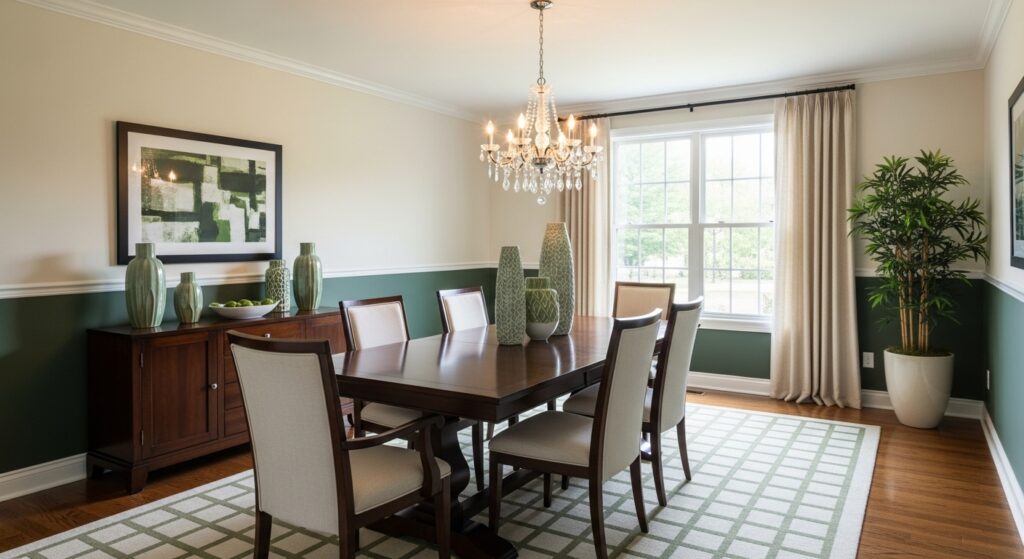
Patterns change everything. A green-and-cream wallpaper with a loose botanical print makes the dining room feel wider, especially if the cream background dominates. A tighter geometric pattern flips that. The room feels more contained, more intentional, sometimes too intentional.
Spatial perception data backs part of this up. High-contrast repeating patterns can reduce perceived room width while increasing visual engagement. That’s a trade-off you don’t notice until chairs feel closer together than before.
I’ve sat in a green and cream patterned dining room where the walls felt closer during dinner than during breakfast. Same furniture. Same light. Different time of day. The room was clearly in charge.
Dark green with cream when balance gets serious
Dark green walls paired with cream trim or ceilings stop the room from collapsing inward. Cream acts like a pause button. Without it, dark green dining rooms can feel heavy, especially at night.
Lighting studies show dark greens absorb significantly more light than warm neutrals, which means cream becomes functional, not decorative. Ceilings painted cream bounce light back down, keeping faces readable across the table. That matters more than style guides admit.
This combo works best when cream leans warm, not yellow. Too much yellow and the green starts looking sickly. Too cool and everything feels distant.
Cream-heavy rooms where green behaves like punctuation
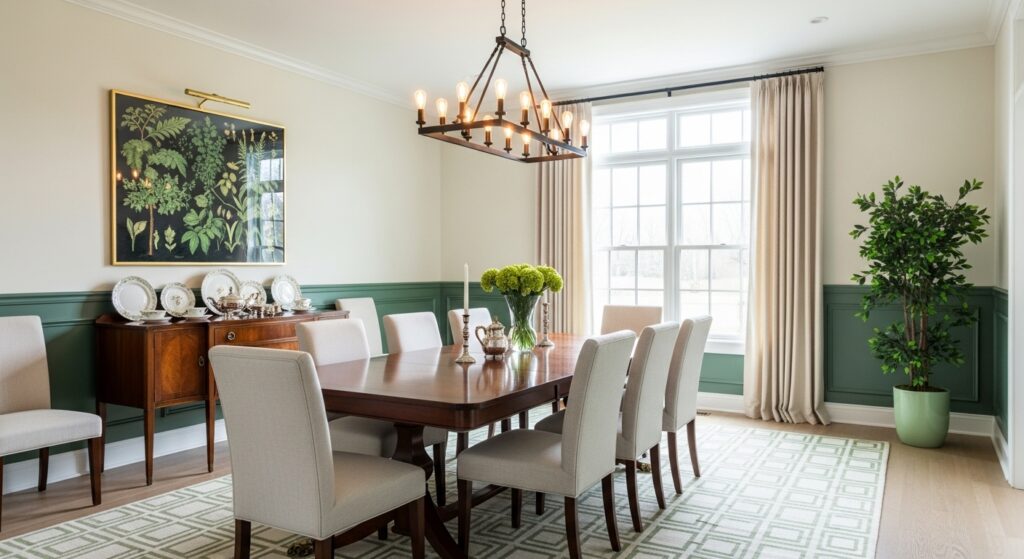
Some dining rooms flip the ratio. Mostly cream, with green appearing in wallpaper accents, chair upholstery, or painted paneling. These rooms feel airy but not blank. Green becomes punctuation rather than language.
Market data from furniture and paint sales shows cream-dominant dining rooms are repainted less often than stark white ones. People don’t get tired of them as fast. The green accents keep things from drifting into nothingness.
The risk is underdoing the green. Too little and the room forgets what it’s supposed to be. Dining rooms need a bit of tension. Cream alone can feel sleepy.
Texture over color when both start feeling flat
Textured finishes save green and cream from boredom. Grasscloth-style wallpapers, plaster-look paints, woven wall panels. Texture creates shadows, and shadows create depth that color alone can’t manage.
Surface interaction studies show textured walls increase perceived richness without increasing color saturation. That’s why textured green and cream rooms often feel layered even when the palette is minimal.
The downside is maintenance. Cream textures show marks. Green textures hide them better. Together, they compromise. Not perfectly, but enough.
Furniture does strange things in green and cream rooms
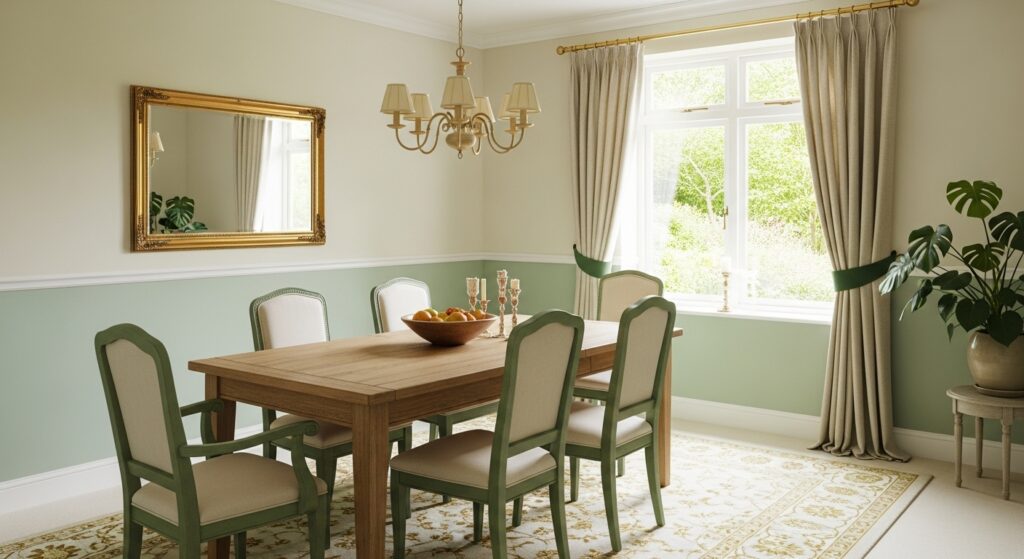
Wood warms up fast in these spaces. Light oak glows. Dark walnut feels heavier, sometimes too heavy. Black furniture looks sharper against cream, calmer against green. Upholstery colors suddenly matter more than expected.
Material perception research suggests warm neutrals like cream amplify surrounding material differences. Cheap finishes show themselves. Good materials get better. Green acts as the referee, keeping things from spiraling.
You’ll start noticing chair legs. Table edges. Things you ignored before.
Practical details people forget until year two
Cream stains. That’s not news. But in dining rooms, cream stains differently depending on the green next to it. Darker greens make stains less obvious. Lighter greens highlight them.
Maintenance data from residential interiors shows washable finishes matter more in cream-heavy dining rooms than anywhere else except kitchens. Matte finishes forgive more. Satin reflects mistakes.
Nobody tells you this when you’re holding samples under store lights that lie.
Conclusion
Green and cream dining room ideas don’t settle. They shift with seasons, meals, lighting, and who’s sitting at the table. Some days the room feels calm. Other days it feels observant. Occasionally it feels like it’s quietly judging your centerpiece choice.
That’s fine. Dining rooms aren’t meant to stay neutral. They’re meant to react. Green and cream do that softly, then firmly, then again differently tomorrow.
Last modified: January 29, 2026