
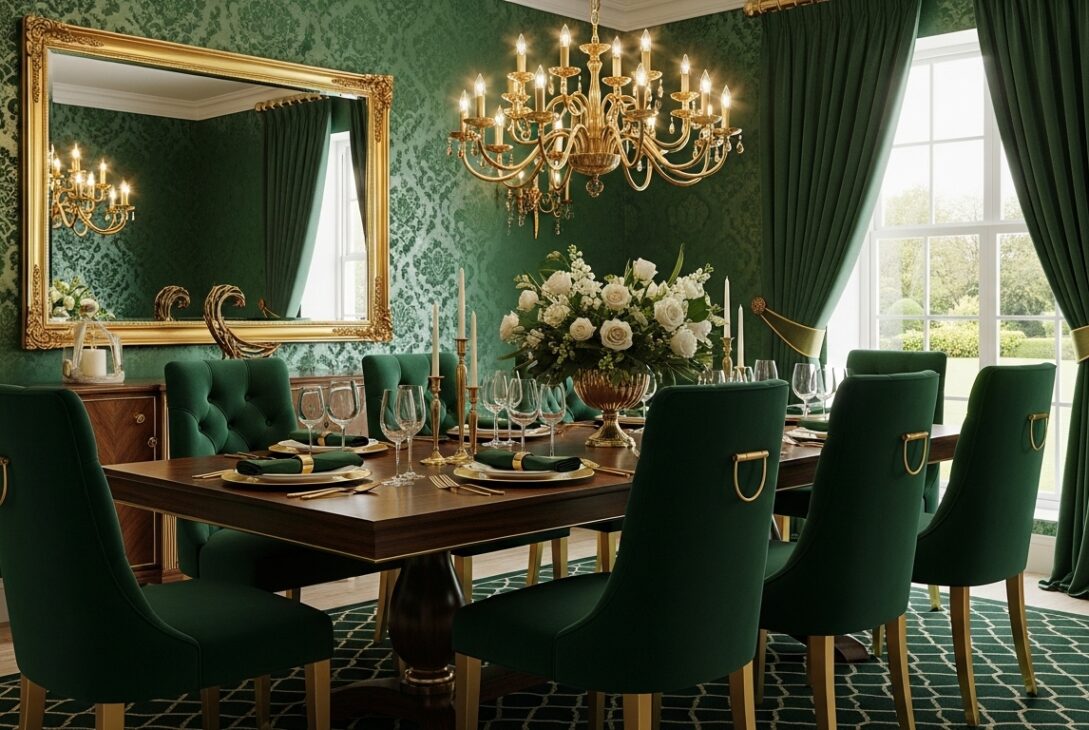
You hear green and gold dining room ideas and your brain probably jumps to fancy. Polished. Maybe too much. That reaction is normal. Gold has a reputation problem. Green pretends to calm it down, but together they can either whisper luxury or shout try-hard depending on one small decision you didn’t think mattered, like bulb temperature or chair legs.
What’s odd is how long this combo sticks once it’s in place. Interior trend data from residential remodel surveys keeps showing green paired with metallic accents ranks higher for long-term satisfaction than gold with neutrals alone. People don’t redo these rooms quickly. They adjust around them instead. That’s telling.
I once walked into a green and gold dining room and felt underdressed. It was my house.
When green does the heavy lifting and gold just interrupts
The smartest green and gold dining rooms let green dominate. Walls, large surfaces, the visual weight. Gold sneaks in later. Light fixtures. Chair caps. Frame edges. If gold shows up too early, the room stiffens. It stops breathing.
Color balance studies show metallics perform best when they occupy less than 10 percent of the visual field in a room. Over that, people report fatigue faster. That explains why subtle gold lines on green wallpaper feel expensive, while full gold patterns feel exhausting after dessert.
I’ve seen someone remove a gold mirror, not because it was ugly, but because the room felt louder with it.
Deep green plus warm gold feels slower somehow
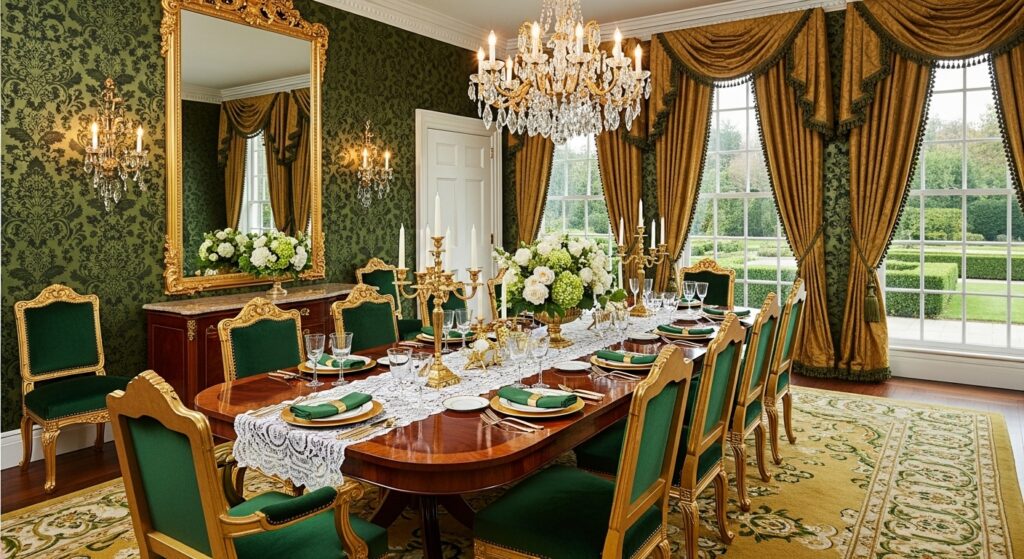
Dark green walls with warm brushed gold accents change pacing. Meals stretch. People sit longer without checking phones. It’s not romantic, it’s heavier. Forest green or emerald paired with antique gold tones absorbs light differently than expected.
Lighting research shows dark green surfaces reflect less blue spectrum light, which can make warm metals appear richer and softer. That’s why gold looks better against green than against white, even when it’s the same finish.
This combo does not forgive cold LEDs. If the light goes wrong, the gold turns brassy and the green looks tired. The room notices immediately.
Soft green and pale gold for people who hate drama but still want attention
Sage or muted green paired with pale gold works for dining rooms that don’t want to announce themselves. The gold almost disappears until sunlight hits it sideways. Then it shows up briefly, like it remembered something important.
Market data from wallpaper and fixture suppliers shows lighter green palettes paired with champagne or brushed gold finishes are most popular in homes with open floor plans. Probably because the combo transitions better into kitchens and living spaces without demanding center stage.
I’ve watched someone walk past a room like this three times before realizing why it felt nice.
Wallpaper where gold behaves and doesn’t steal the room
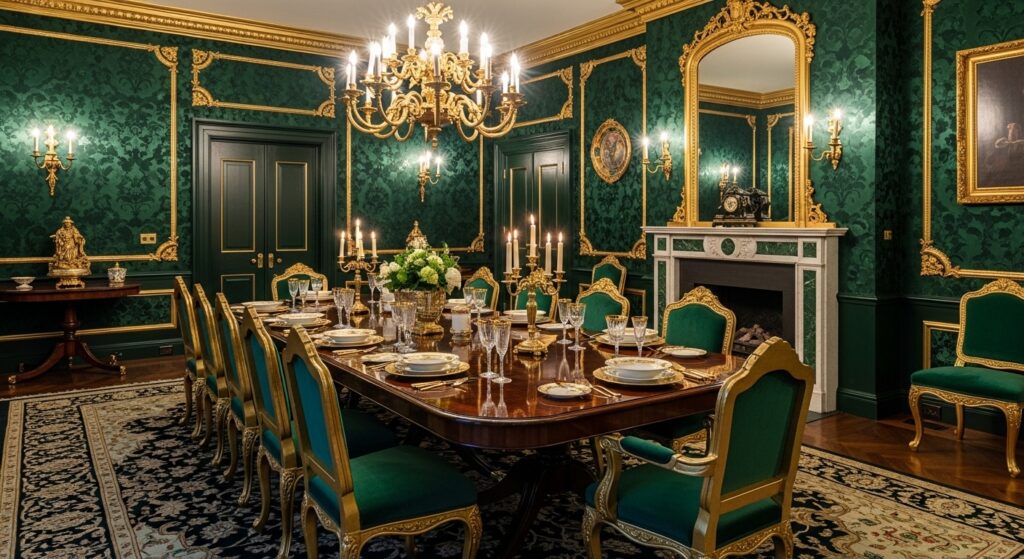
Green wallpaper with gold detailing is risky. Thin gold lines work. Foil-heavy prints usually don’t. The issue isn’t shine, it’s repetition. Gold repeating too often starts to feel mechanical.
Pattern fatigue studies suggest metallic repeats cause faster visual burnout when spacing is too tight. That’s why wide-spaced motifs or irregular gold accents feel calmer. The eye gets breaks.
I once stared at gold dots on green wallpaper during dinner and lost track of the conversation. The wall won.
Furniture choices that accidentally decide everything
Green and gold walls don’t tolerate random furniture. Black chairs sharpen the look instantly. Wood warms it but can muddy things if the undertone fights the green. Upholstery matters more than usual. Neutral fabrics calm gold down. Patterned fabrics stir it up.
Material perception research shows metallic accents amplify contrast in surrounding objects. That’s why cheap finishes look cheaper in green and gold rooms. The walls don’t hide mistakes. They underline them politely.
You start replacing things slowly. One chair. One light. You swear it’s unrelated.
Ceiling, trim, and the forgotten gold moments
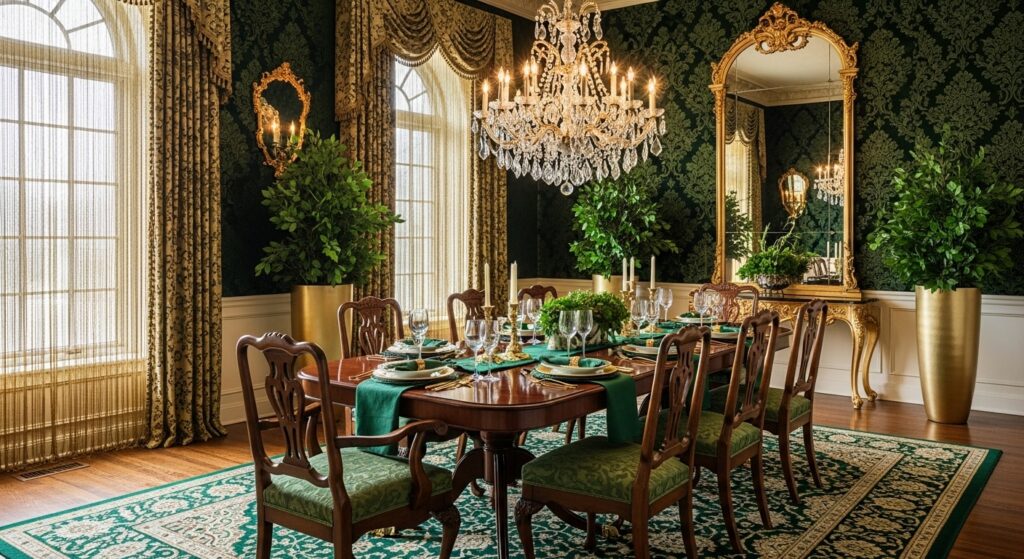
Most people forget the ceiling. That’s where gold works quietly. A thin gold line at crown molding. A warm metallic sheen in a ceiling fixture. Even gold-toned screws in visible hardware change the room’s tone.
Interior detailing data shows rooms with metallic accents above eye level feel taller and more composed. Probably because the eye lifts. Dining rooms benefit from that more than most spaces.
Nobody plans this. It just happens if you’re paying attention.
Practical things nobody brings up while you’re inspired
Gold finishes show dust faster than paint. Dining rooms collect grease particles over time. Brushed gold hides this better than polished. Matte green walls forgive more than satin ones. Satin reflects fingerprints sideways, which is unsettling once you notice it.
Maintenance reports consistently show metallic-accent dining rooms require more frequent light cleaning, not deep cleaning. Skip that and the room dulls quietly.
You’ll blame the color. It’s not the color.
Ending
Green and gold dining room ideas aren’t about luxury or restraint. They’re about tension. Calm versus shine. Earth versus ornament. When it works, the room feels intentional without explaining itself. When it doesn’t, you feel watched while eating.
That edge is part of the appeal. Dining rooms aren’t meant to be neutral boxes. They’re meant to hold conversations, pauses, awkward silences, celebrations. Green and gold can handle that weight, as long as you don’t ask them to behave perfectly.
Last modified: January 29, 2026