
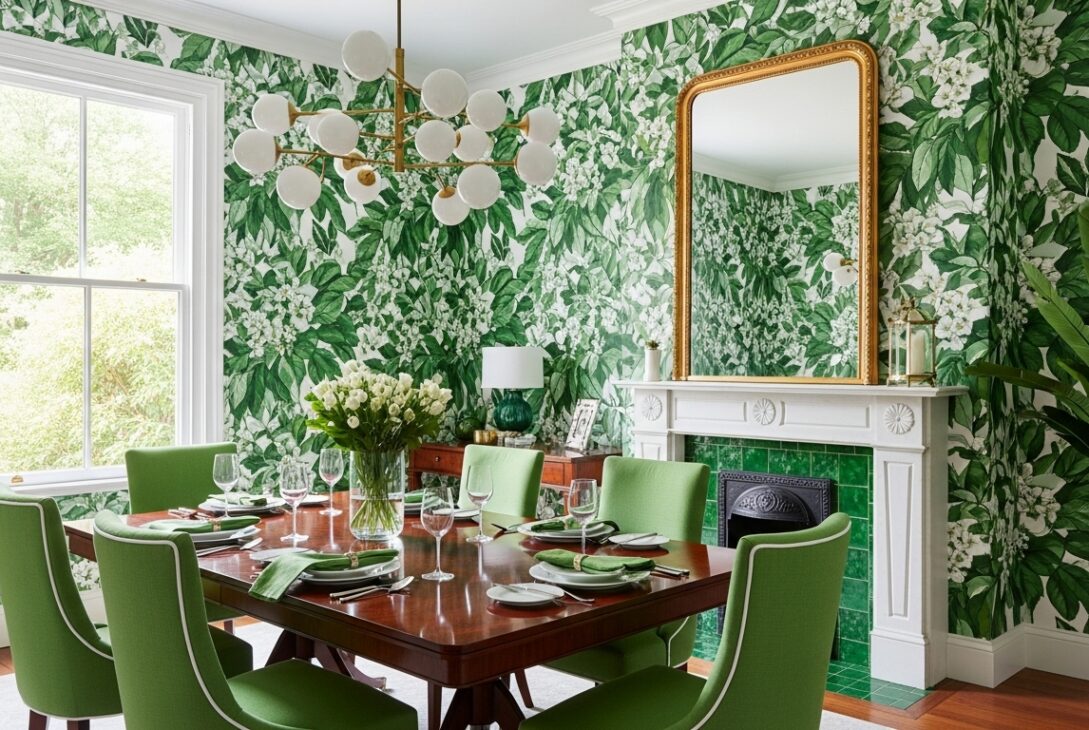
You pick green and white dining room wallpaper thinking it will be safe. Calm. Mild-mannered. And then suddenly the room starts acting like it has opinions. The green leans forest one minute, then celery-stick fresh the next, and white stops being white at all, more like eggshell with a mood. You notice it most at night, when the overhead light flicks on and the wallpaper decides whether dinner feels cozy or slightly dramatic. That choice matters more than people admit.
Green and white works because your brain already trusts it. Data from housing and interior surveys keeps circling the same point: green is among the top three colors homeowners associate with relaxation and appetite balance, which is a strange phrase but it shows up in studies. Restaurants use it quietly. Homes copy it accidentally. White, meanwhile, still reflects about 80 percent of visible light in most finishes, which is why dining rooms with white backgrounds tend to feel bigger even when the table barely fits.
I once thought wallpaper was for hallways only. Then I ate soup in a dining room wrapped in pale sage vines and changed my mind halfway through the spoon.
Soft greens
Soft green tones like sage, mint, or dusty olive behave politely at first. They sit there. They wait. Then they start shaping the whole room without permission. A sage and white dining room wallpaper can make wood tables feel older in a good way, like they have stories but won’t tell them yet. Mint green, lighter, slightly nervous, tends to bounce light around, which helps in dining rooms that only get morning sun, or worse, no sun at all.
There’s data behind the softness thing. Interior color research has shown lighter greens reduce visual fatigue compared to saturated reds or yellows, which might explain why long dinners stretch longer in green rooms. People linger. Plates stay out. Someone pours another drink even though they said they wouldn’t.
White in these patterns usually isn’t stark. It’s warm. Slightly creamy. If it’s too bright, the green looks washed, like spinach left in water too long.
Patterns
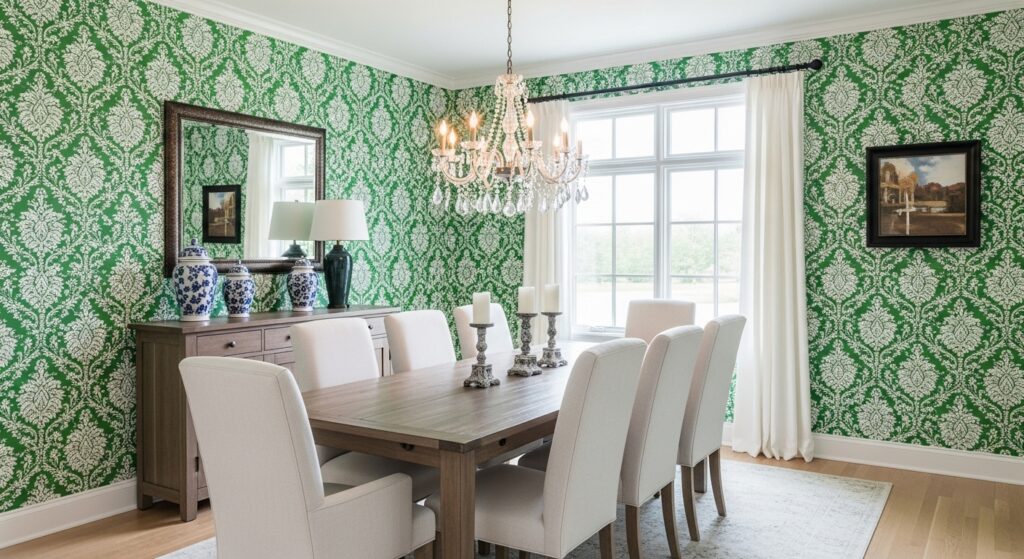
This is where green and white dining room wallpaper ideas start arguing with each other. Botanical prints feel safe until the leaves get oversized, then suddenly the room feels like it’s growing inward. Geometric patterns promise order, but they can mess with your depth perception if the repeat is tight. Trellis designs sit somewhere between polite and stubborn, repeating themselves like they’re proving a point.
Industry numbers back this up oddly enough. Wallpaper with medium scale repeats has been shown to feel less visually tiring than very small or very large repeats, which is why dining rooms with mid-size patterns tend to age better. People don’t rip them out as fast. They tolerate them. Sometimes even love them longer than expected.
I once sat in a dining room with green geometric wallpaper and felt like the wall was watching me chew. That’s not scientific, but it stayed with me.
Dark green with white
Dark green and white wallpaper feels bold until you live with it. Emerald, forest, deep moss shades pull the room inward, making dinners feel more intentional, more serious. White lines or motifs break it up, stopping the walls from feeling heavy. Without white, dark green dining rooms can feel like a library you’re not allowed to touch.
Lighting matters more here than people say out loud. Studies on interior brightness show darker walls can reduce perceived room size by up to 20 percent if lighting isn’t adjusted. That means more lumens, warmer bulbs, sometimes even candles just to soften the edges.
Dark green wallpaper pairs strangely well with mismatched chairs. That’s not in any guide, but it works. The formality cracks a bit, and the room breathes.
Vintage greens
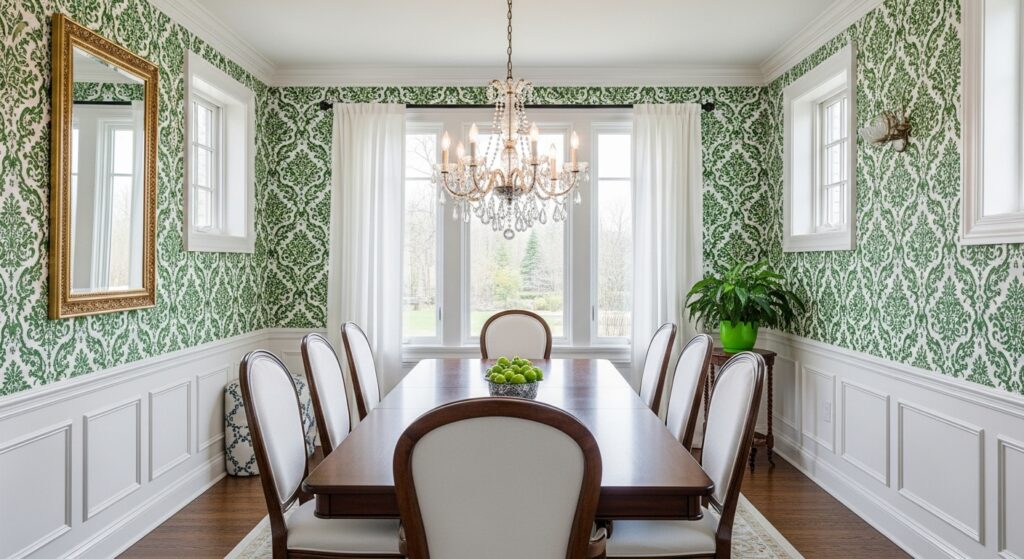
Vintage-style green and white dining room wallpaper doesn’t try to impress you. It just exists, with odd florals, faded stripes, maybe an art deco curve that feels borrowed. These patterns often use off-register printing styles on purpose, which gives them that imperfect charm people now chase.
Wallpaper sales data from restoration and heritage home markets shows vintage-inspired designs have grown steadily over the last decade, especially in dining rooms and powder rooms. People want rooms that feel like they were there before them. Green helps with that illusion. White keeps it from feeling dusty.
There’s something comforting about eating in a room that looks like it remembers other meals. Even if it doesn’t.
How furniture reacts whether you ask it or not
Furniture doesn’t stay neutral in a green and white dining room. Light oak turns warmer. Dark walnut looks heavier. Painted chairs suddenly matter more than you planned. White wallpaper elements often echo in table legs, trim, or even plates, tying things together accidentally.
Design behavior studies have noted that high contrast wall patterns tend to make people choose simpler furniture silhouettes over time. You might start with ornate chairs, then slowly replace them with cleaner lines because the walls are already talking enough.
This happens quietly. One chair at a time.
The parts people skip and regret later
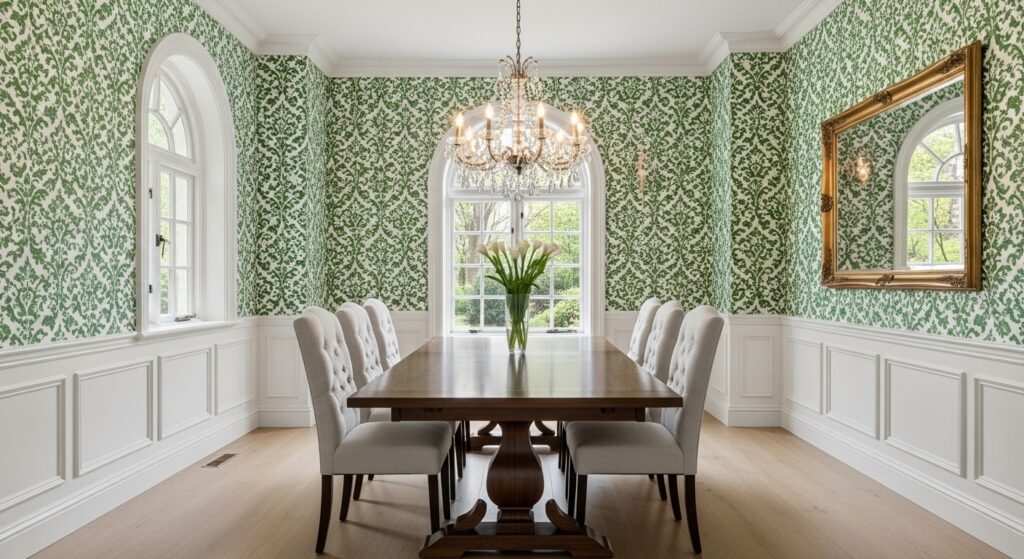
Wallpaper seams show more in dining rooms than living rooms because people sit and stare at the same walls longer. Green especially can highlight misalignment. White makes every tiny bubble visible. Installation data from trade surveys consistently ranks dining rooms among the top spaces where poor wallpaper work gets noticed fastest.
Humidity matters too. Dining rooms see more temperature shifts than bedrooms. Hot food, steam, people breathing. Vinyl-backed wallpapers perform better long-term in these spaces, statistically speaking, with fewer reported edge lifts over five years compared to paper-only options.
Nobody mentions this at the store. They should.
Ending without really ending
Green and white dining room wallpaper ideas don’t settle into one answer. They shift with light, furniture, seasons, even moods. One week it feels calm. Next week it feels bossy. That’s part of the appeal, even if you won’t say it out loud.
You don’t choose it because it’s easy. You choose it because it keeps reacting back. And honestly, dining rooms should do that. They’re not meant to stay quiet forever.
Last modified: January 29, 2026