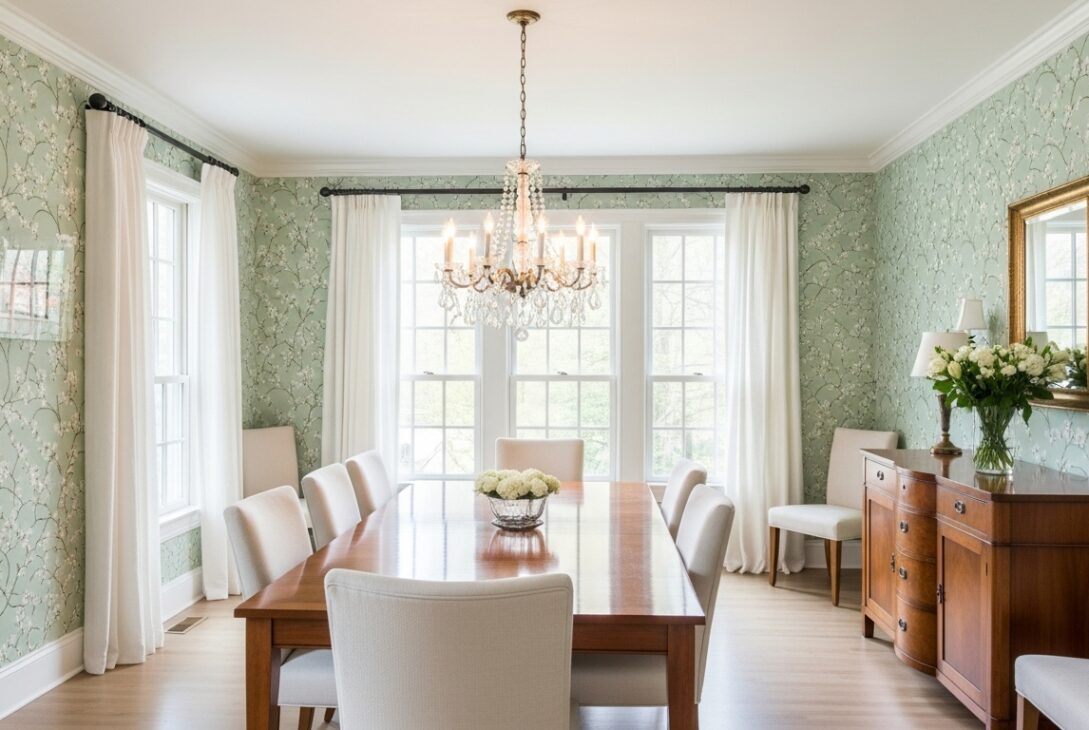
Light green sounds harmless on paper. Almost polite. You hear it and think fresh, soft, maybe a little boring. Then you actually put light green dining room wallpaper on the walls and the room starts acting brighter than expected, louder in reflections, softer in corners. It doesn’t shout, but it keeps interrupting in small ways. That’s the part nobody warns you about.
Light green interacts with daylight aggressively. Interior lighting data shows pale greens reflect more ambient light than many off-whites, especially during mid-day hours. So the dining room shifts tone depending on time, breakfast pale, lunch almost minty, dinner slightly gray-green if the bulbs are warm. Same walls, different personality, same chair, new mood.
I once thought the wallpaper changed color overnight. It didn’t. The sun just moved.
Barely – there greens that act like filters
Some light green wallpapers are so soft they behave more like a lens than a color. Think celery mist, diluted pistachio, green that looks like it’s been washed twice. These tones don’t dominate the dining room. They sit between you and everything else.
Furniture reacts strangely here. White tables look cleaner. Wood feels lighter, even if it’s not. Studies on color adjacency show pale green backgrounds increase perceived cleanliness and openness in interior spaces. That explains why people wipe tables more often in rooms like this. It feels wrong to leave crumbs behind.
The danger is overdoing brightness. Too much white furniture and the room turns clinical. You don’t want a dining room that feels like it’s judging your plate.
Light green with pattern
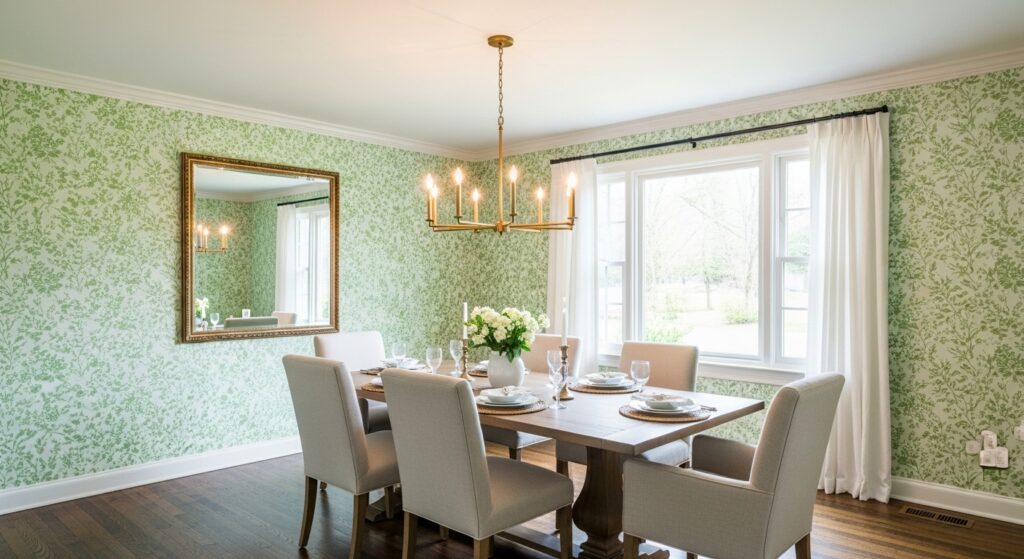
Patterns in light green wallpaper behave differently than darker shades. They hide until the light hits just right. Florals fade in and out. Stripes appear only when you move your head. Geometric shapes soften themselves without permission.
Design fatigue studies suggest low-contrast patterns keep visual interest longer during seated activities. Dining rooms benefit from that. People don’t feel overwhelmed. They don’t feel bored either. The walls become something you notice when conversation stalls, then forget again.
I’ve watched guests trace patterns with their eyes mid-sentence. Not distracted. Just thinking.
When light green goes cool and changes the room temperature
Some light greens lean cool. Almost mint, almost blue, but not quite. These shades lower perceived room warmth. Thermal perception research shows cooler colors can make spaces feel several degrees cooler, even when the thermostat doesn’t move.
In dining rooms, this matters. Meals feel lighter. Heavy dishes feel heavier by contrast. People eat slower. Drinks stay untouched longer. If your dining room gets a lot of afternoon sun, this shade balances it nicely. If it doesn’t, the room can feel slightly underdressed.
Cool light green wallpaper pairs better with warm woods than cool metals. Stainless steel looks harsh here. Brass survives better. Black feels sharp.
Warm light green that pretends it’s neutral
Warm light green is the sneaky one. It reads neutral at first glance, then slowly reveals its color. These wallpapers work well in dining rooms that open into other spaces, because they don’t demand attention immediately.
Color preference surveys show warm light greens score high for compatibility with multiple décor styles. People don’t feel boxed in by it. They change chairs. Swap tables. The wallpaper stays.
But it’s sensitive. Lighting choice matters more than people admit. Cool bulbs kill it. Warm bulbs let it breathe. I’ve seen the same wallpaper look wrong and right in the same day just because someone changed a bulb.
Textured light green for people afraid of commitment
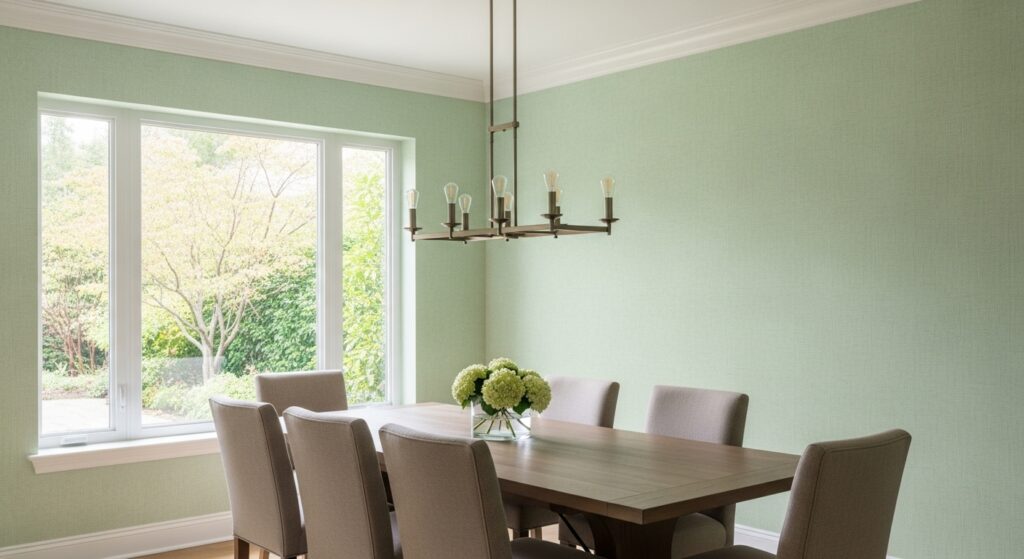
Texture saves light green from feeling flat. Linen effects, plaster looks, soft grain patterns give the walls something to do when color alone feels thin. Textured wallpapers also scatter light, reducing glare.
Maintenance data from dining installations shows textured pale wallpapers hide minor stains better than smooth finishes. Not grease stains, those still show, but fingerprints and scuffs fade faster.
The catch is seams. Light colors expose mistakes. Texture helps but doesn’t forgive everything. The wall remembers bad installs.
Light green in small dining rooms where space lies
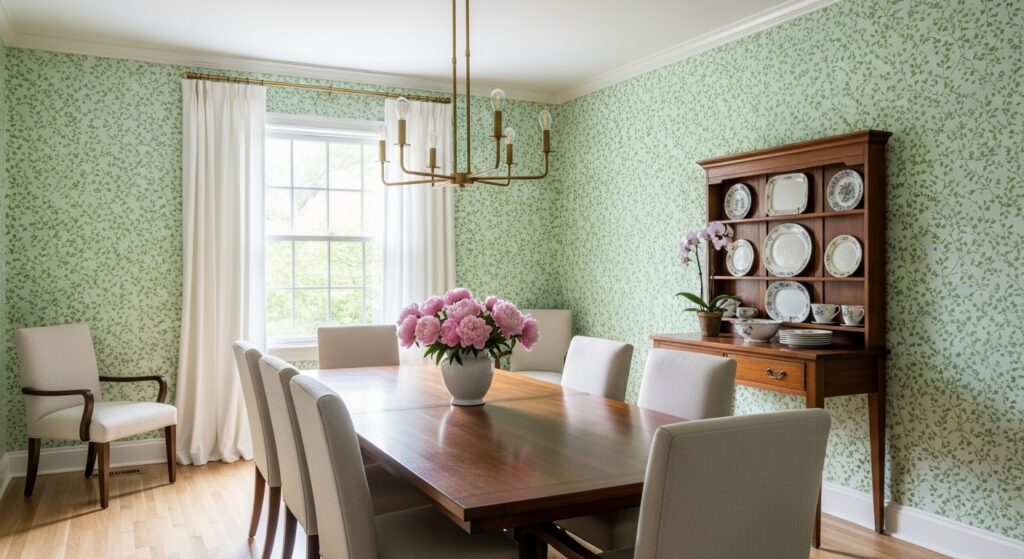
Small dining rooms love light green. Or maybe light green loves small rooms. Spatial perception studies consistently show pale greens increase perceived depth more than beige or gray. The walls feel further away. The table feels less cramped.
Vertical pattern elements amplify this effect. Horizontal ones widen the room but shorten it visually. People argue about this. The data keeps leaning vertical.
I once sat in a narrow dining nook wrapped in light green wallpaper and forgot it was narrow. That’s rare.
Furniture and objects quietly changing behavior
Light green walls make objects behave better. Plants look healthier. White dishes glow. Wood grain softens. Dark furniture lightens visually without actually changing.
Behavioral design research suggests lighter green environments encourage longer seated stays without increasing restlessness. That’s perfect for dining rooms where conversations matter more than turnover.
Cheap finishes still look cheap though. Light green doesn’t hide flaws. It just presents them gently.
Things you only think about after living with it
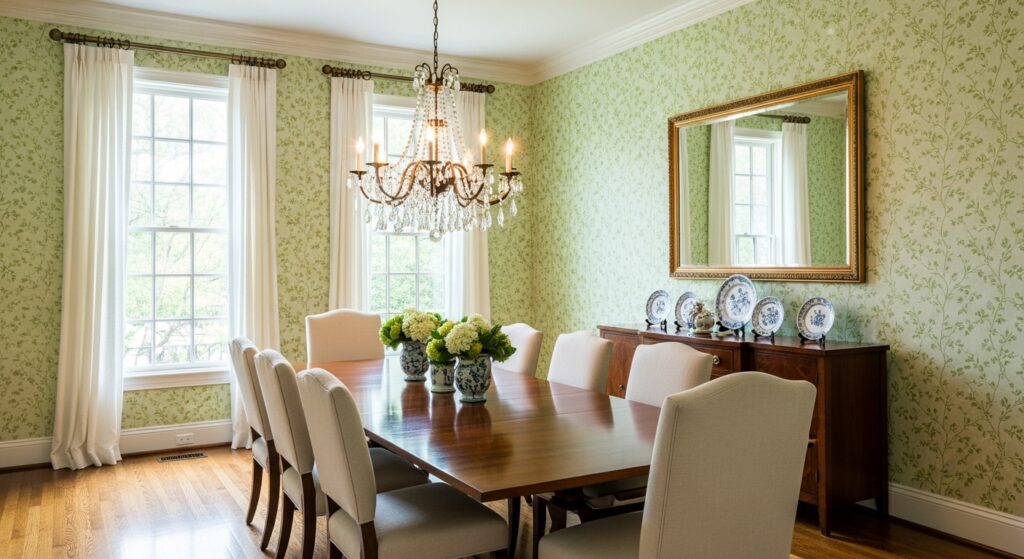
Dining rooms get messy. Steam, spills, hands touching walls while chairs move. Light green shows dirt differently than white. Less harsh, but more persistent. Washable finishes matter here. Matte beats satin almost every time.
Humidity studies show dining rooms experience more micro-condensation than living rooms. Wallpaper rated for moisture resistance lasts longer. This isn’t exciting information, but it saves money.
Nobody mentions this when you’re excited about samples.
Ending without solving anything
Light green dining room wallpaper ideas don’t settle into one mood. They drift. They adjust. Some days the room feels open and calm. Other days it feels alert, almost awake. That’s fine.
Dining rooms don’t need a fixed personality. They just need walls that can keep up with changing light, changing food, changing conversations. Light green does that quietly, even when you’re not paying attention.
Last modified: January 29, 2026