
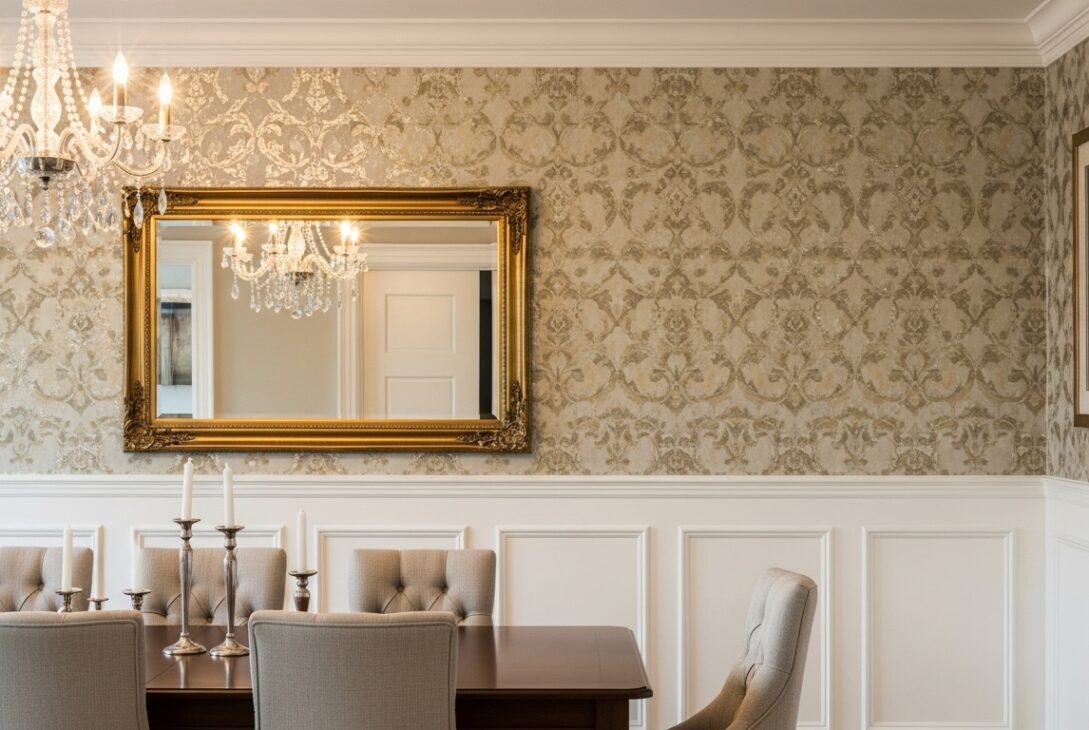
Wallpaper for dining room with wainscoting sounds orderly on paper. Structured. Sensible. Then you actually live with it and realize the room keeps changing its mind depending on time of day, food smells, who’s sitting where, and whether the chairs scrape loudly or politely. Wainscoting pretends it’s about protection. Wallpaper pretends it’s decoration. Together they quietly rearrange how the room behaves.
Design usage reports over the last decade show dining rooms are one of the fastest growing spaces for mixed wall treatments, especially wallpaper paired with paneling or beadboard. People want walls that do more than sit there. They want layers. They want permission to break symmetry without chaos.
I once thought wainscoting was old-house stuff. Then I watched wallpaper make it feel current again, and I had to backtrack mentally.
How the height of wainscoting changes everything without warning
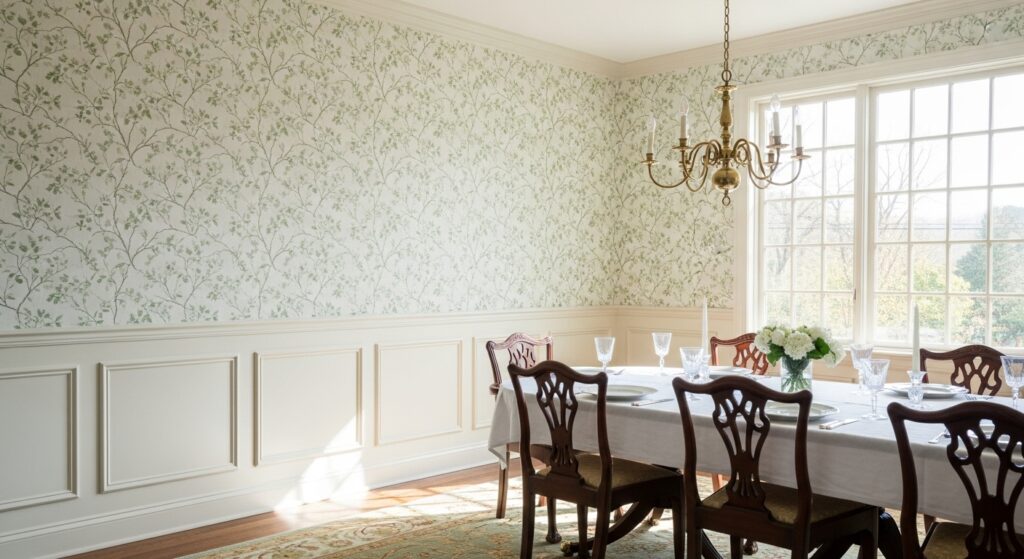
The height of the wainscoting decides how loud the wallpaper is allowed to be. Low wainscoting, around chair-rail height, makes wallpaper feel taller, like it’s stretching upward to prove a point. Higher wainscoting, closer to mid-wall, compresses the wallpaper area, forcing patterns to behave or look ridiculous.
Interior proportion studies show rooms with visual breaks at one-third or two-thirds wall height tend to feel more balanced during seated activities. Dining fits that category. That’s why wallpaper above wainscoting often feels calmer than full-wall coverage, even with bolder patterns.
I’ve seen a dining room ruined by wallpaper that was great on its own but panicked when it lost wall space.
Subtle wallpaper when the wainscoting wants attention
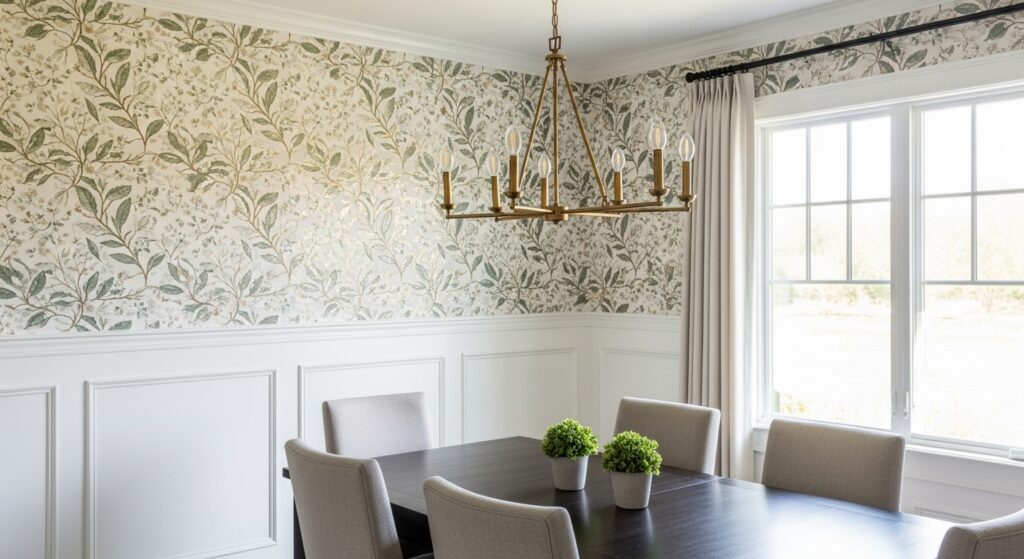
If the wainscoting is detailed, raised panels, heavy molding, deep grooves, the wallpaper has to step back. Soft textures. Light repeats. Almost boring up close. From the table, though, it reads layered, intentional, like someone thought about it longer than they probably did.
Market data from renovation surveys shows homeowners are less likely to regret wallpaper choices when wainscoting carries the visual weight. The wallpaper becomes atmosphere, not focal point. That’s safer long-term.
I once ignored this rule and watched floral wallpaper fight with ornate paneling. Nobody won.
Bold wallpaper when the lower wall stays quiet
Flat panel or simple shaker-style wainscoting gives wallpaper permission to misbehave. Large-scale patterns. High contrast. Even moody colors that would overwhelm a full wall suddenly feel contained and controlled.
Visual perception research shows framing bold elements reduces cognitive overload. Wainscoting acts like a frame. The wallpaper becomes art instead of noise. That’s why dining rooms can handle patterns here that would feel exhausting in living rooms.
You don’t notice it at first. You notice it when guests stop mid-sentence to look around.
Color relationships people underestimate
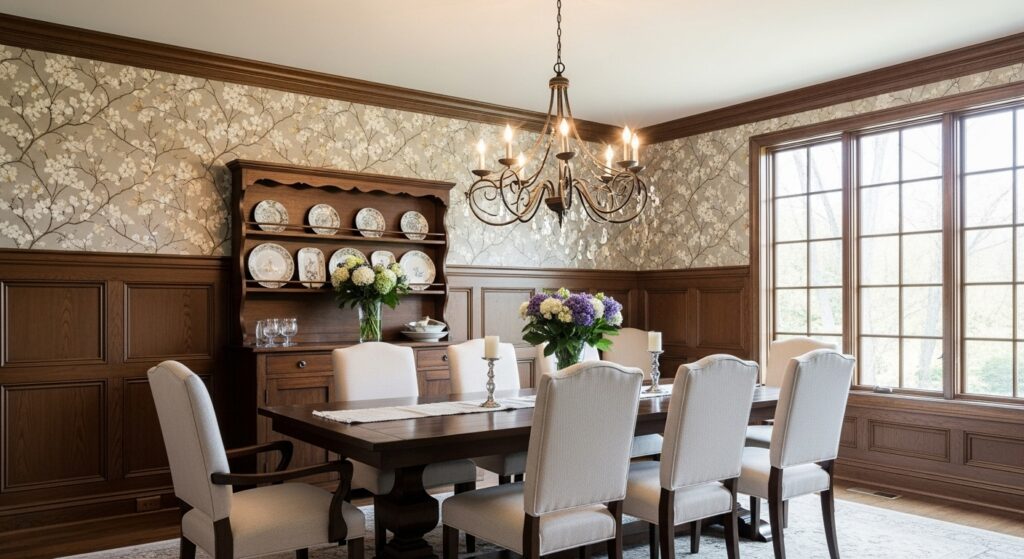
Wallpaper for dining room with wainscoting works best when the lower wall color isn’t an afterthought. Painted paneling reflects light upward. That reflected color changes the wallpaper tone subtly but constantly.
Light wainscoting brightens darker wallpapers. Dark wainscoting grounds lighter wallpapers. Color interaction studies show reflective surfaces influence perceived hue more than direct lighting in enclosed rooms. Dining rooms qualify.
This is why samples lie. They don’t account for bounce-back color from below.
I once chose wallpaper based on a sample that looked perfect. Installed, it felt wrong. The wainscoting was whispering into it all day.
Pattern scale versus panel rhythm
Wainscoting introduces rhythm. Panels repeat. Lines run vertical or horizontal. Wallpaper patterns either cooperate or clash. Small busy prints can vibrate visually when paired with narrow panels. Large loose patterns calm things down by ignoring the panel rhythm altogether.
Design behavior data suggests mismatched pattern frequencies increase visual fatigue over time. Dining rooms are high-risk for that fatigue because you stare at the same walls repeatedly.
If your panel spacing is tight, go big with wallpaper. If panels are wide, medium patterns can work. Tiny patterns are the most dangerous here.
Nobody warns you about this until you’re already annoyed.
Texture instead of pattern for people who hate commitment
Textured wallpapers above wainscoting do something sneaky. They add depth without telling a story. Linen textures, grasscloth-inspired looks, lightly embossed finishes catch light differently throughout the day.
Replacement rate studies show textured wallpapers paired with wainscoting last longer before homeowners change them. Less regret. Less boredom. The room ages quietly.
The downside is seams. Texture shows mistakes. You’ll notice them during long dinners when your eyes wander.
Vintage wallpaper with traditional paneling feels inherited
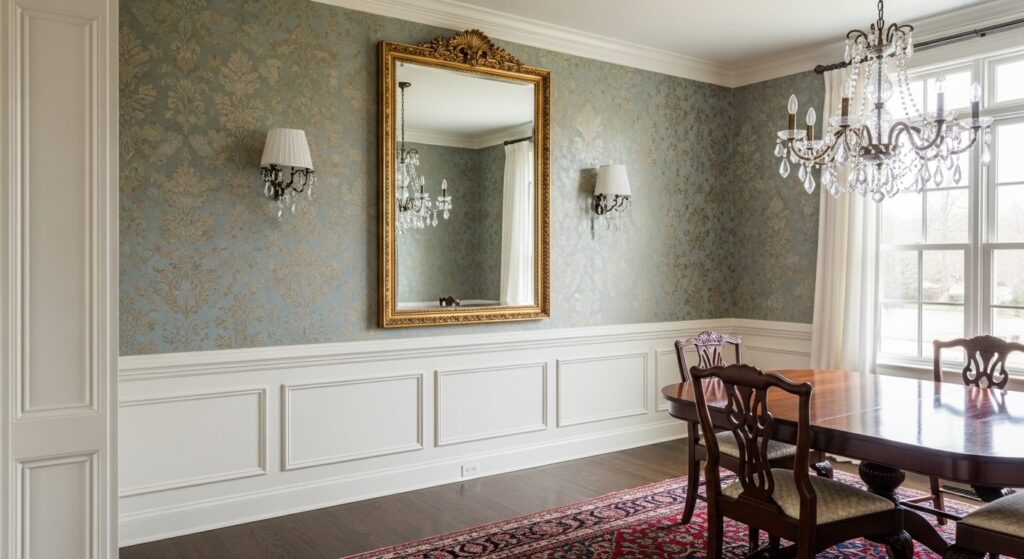
Traditional wainscoting loves vintage wallpaper. Muted florals. Slightly faded tones. Patterns that feel like they’ve been there longer than you have. This pairing taps into familiarity bias, people feel comfortable in rooms that look remembered.
Historical interior trend analysis shows heritage-style dining rooms maintain higher perceived value even when materials aren’t premium. The look carries weight on its own.
I ate in a dining room like this and felt like I should lower my voice, even though nobody asked me to.
Practical things people forget until stains show up
Dining rooms see steam, splatter, fingerprints. Wallpaper above wainscoting gets touched more than expected. Performance data shows washable wallpapers paired with painted paneling outperform paper-only setups in longevity.
The seam where wallpaper meets wainscoting matters. Poor alignment shows immediately. That line becomes an eye magnet during meals. Matte finishes hide this better than glossy ones.
Nobody mentions this at the design phase. They talk about vibe instead.
Conclusion
Wallpaper for dining room with wainscoting ideas aren’t about following rules. They’re about managing tension. Order below. Expression above. Sometimes calm. Sometimes not. The room shifts depending on light, food, and people.
That’s fine. Dining rooms aren’t meant to stay fixed. They’re meant to host moments. Wainscoting holds the structure. Wallpaper handles the mood. And together they quietly decide how long everyone stays at the table.
Last modified: January 29, 2026